Why Does My Skin Look Dull and Tired? How to Support Radiant Skin From Within
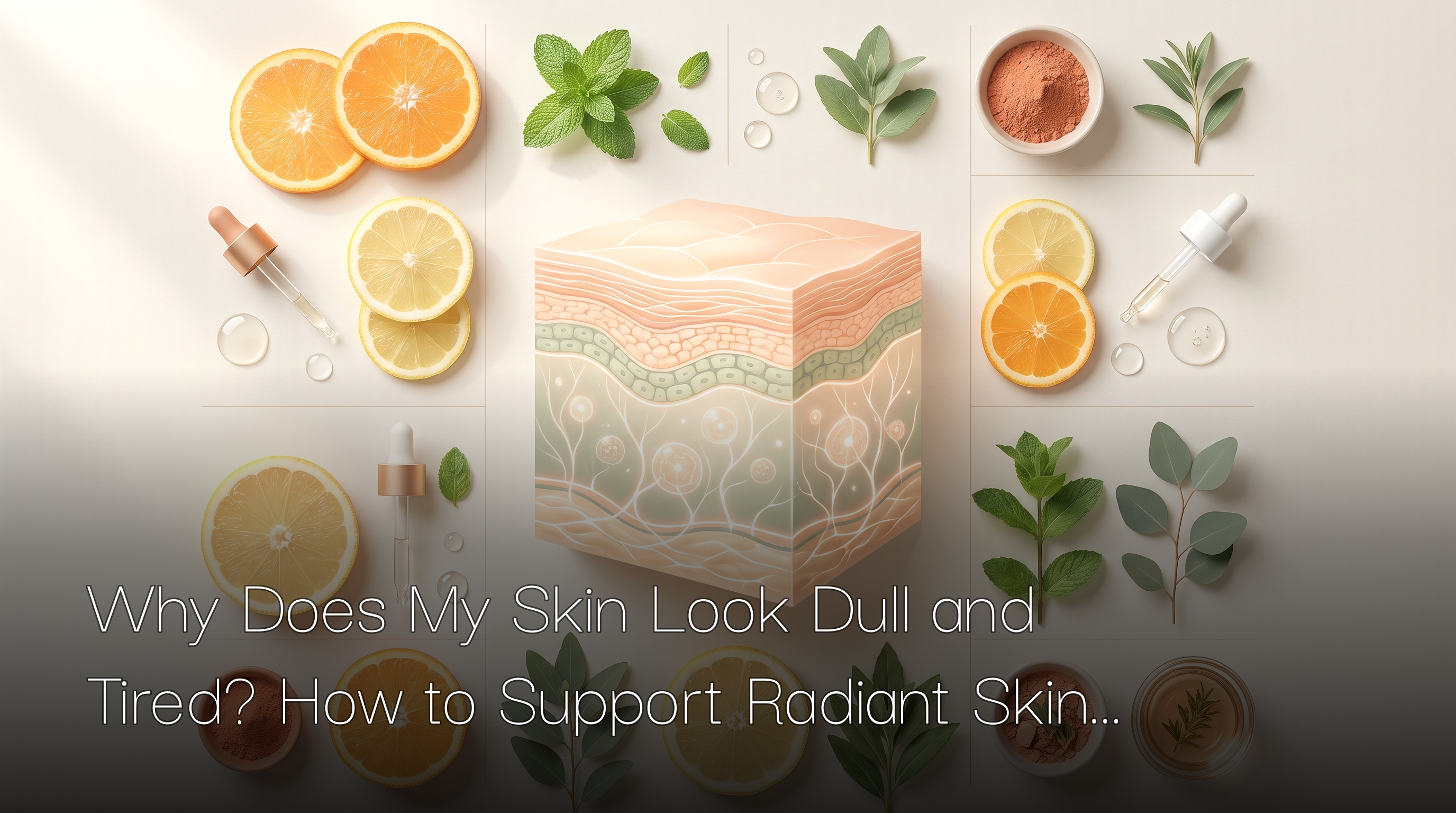
Why Does My Skin Look Dull and Tired? How to Support Radiant Skin From Within
You slept eight hours, drank your water, cleansed your face. And yet the mirror still shows someone who looks exhausted. It's frustrating, and it's more common than you'd think. Dull skin isn't one problem with one fix. It's usually several things happening at once, most of them well below the surface.
Here's what's actually going on, and what you can do about it starting today.
What Actually Causes Skin to Lose Its Glow
Radiant skin reflects light evenly. When that reflection gets scattered or absorbed, your complexion looks flat, grey, and tired. The reasons this happens are both structural and biological.
Skin cell renewal begins to slow as early as your late 20s. (Luminance HBC) Dead cells accumulate on the surface instead of shedding efficiently, creating a layer of buildup that blocks light. Underneath that, collagen production also starts to decline, which reduces the skin's firmness and plumpness. Less structure means less bounce, and less bounce means less glow.
Dehydration plays a huge role too. When skin loses adequate moisture, it can't reflect light the way it should. It looks flat. Fine lines appear more obvious. The skin simply stops behaving like healthy skin. This is distinct from having a "dry skin type" - dehydration can affect oily skin just as easily.
Pollution adds another layer of difficulty. Environmental particles compromise the skin's moisture barrier, contribute to dead cell buildup, and clog pores, accelerating the dull and tired look over time. (Eucerin)
The Six Habits That Quietly Drain Your Skin's Radiance
- Sleep: Studies confirm that sleep deprivation measurably worsens facial dullness. (Eucerin) During deep sleep, your body ramps up collagen production and repairs damaged cells. Cutting that short, even by an hour or two consistently, shows on your face. Seven to nine hours is the target. Not a rough average. An actual nightly goal.
- Stress: Chronic stress raises cortisol levels, and elevated cortisol dehydrates the skin, triggers breakouts, and dulls the complexion. (Howard Health and Wellness) If your skin has looked consistently off during a high-pressure stretch at work or home, this is probably part of the reason. Managing stress isn't just mental wellness - it's skin health from within.
- Dehydration: Dermatologists recommend 8 to 10 glasses of water daily to maintain skin elasticity, flush waste products, and support a clear, supple complexion. (MDCS Dermatology) That said, drinking water alone isn't a complete solution. Topical moisturisers with barrier-supporting ingredients are still needed because water intake doesn't guarantee that moisture reaches the skin's surface layers.
- Poor diet: A diet rich in antioxidants, omega-3 fatty acids, and vitamins C, E, A, and zinc directly supports collagen production and protects skin against environmental stressors. (Dermatology of Seattle) Swap in fatty fish like salmon, a handful of walnuts, a cup of mixed berries, some leafy greens. These aren't abstract "superfoods." They contain specific nutrients your skin uses to repair and rebuild.
- Low movement: Reduced physical activity lowers circulation, and that means fewer nutrients reaching skin cells. (Dermatology of Seattle) The glow that follows a good workout isn't just in your head. It's blood flow doing its job. Even a 30-minute walk daily makes a real difference over weeks.
- UV exposure: Daily sun without adequate protection leads to hyperpigmentation, collagen breakdown, and uneven tone - all of which add up to a fatigued, older-looking complexion. (Luminance HBC) This is one of the most consistent contributors to dullness, and one of the most preventable.
Eating for Radiance and Natural Skin Rejuvenation Support
What you eat is genuinely one of the most powerful tools for supporting healthy skin naturally, and it's often the last thing people consider when they think about skin health from within.
- Vitamin C is essential for collagen synthesis. Your body cannot produce collagen without it. Kiwi fruit, red peppers, broccoli, and citrus are all strong sources.
- Vitamin E works as an antioxidant, protecting cell membranes from oxidative stress. Think almonds, sunflower seeds, avocado.
- Zinc supports wound healing and helps regulate oil production. You'll find it in legumes, pumpkin seeds, and meat.
- Omega-3 fatty acids, found in oily fish, flaxseed, and walnuts, reinforce the skin barrier and help retain moisture.
The combination of collagen and vitamin C deserves specific attention. Vitamin C doesn't just support collagen - it's required for the enzymatic reactions that form stable collagen fibres. Without adequate vitamin C, those fibres don't form correctly. Getting both from food, or from a well-formulated supplement, is a smarter approach than either alone.
For anyone exploring beauty supplements in South Africa, hair skin and nails wellness formulas that include these specific micronutrients are worth researching. More on that below.
Topical Habits Still Matter. They Just Can't Work Alone.
Internal habits drive radiance from below. Topical habits manage what's happening at the surface. You need both.
A gentle, non-stripping cleanser is the starting point. Harsh cleansers disrupt the skin barrier and, ironically, cause the dullness they're marketed to solve. Moisturising with ingredients like hyaluronic acid or glycerin helps bind water to the surface layers, keeping skin plump and reflective.
Broad-spectrum SPF 30 or higher, applied every morning and reapplied when outdoors, is non-negotiable. (Dermatology of Seattle) In South Africa especially, UV intensity is significant year-round. Skipping SPF is one of the most common skincare mistakes people make, and its effects compound quietly over months and years.
Exfoliation helps clear dead cell buildup, but over-exfoliation strips the barrier and makes everything worse. Two to three times per week with a gentle chemical exfoliant is a reasonable starting point for most people, not daily scrubbing.
When to Pay Closer Attention
Sometimes dullness persists despite good habits. Hormonal changes, thyroid function, and underlying skin conditions can all affect how your skin looks and responds to care. If you're doing the basics consistently and your skin still looks persistently grey or fatigued, a conversation with a dermatologist is a worthwhile step. Persistent dullness isn't always a lifestyle problem.
A Practical Starting Point
If you're going to change one thing this week, prioritise sleep and SPF. Not because other things don't matter, but because those two have outsized effects relative to the effort involved.
After that, focus on:
- water intake
- more colour on your plate
- some form of daily movement
These aren't dramatic changes. They're consistent ones. And consistency is what actually shifts how your skin looks and feels over time. Radiant skin builds on radiant skin habits.
For those who want to complement these daily habits with targeted nutritional support, there are wellness solutions designed to work alongside the fundamentals, focused on the key micronutrients involved in collagen production and skin elasticity support. If you're curious about what that might look like for your routine, explore the options available in your area and see how they fit into your broader approach. No single supplement replaces the fundamentals, but the right support, paired with consistent habits, can make a real difference to how your skin looks and feels from within.
Bioharmony Group
We believe true health starts from within.. Subscribe to my newsletter.
Why You're Exhausted Before the Day Starts (And How to Actually Fix It) Why You're Exhausted Before the Day Starts (And What Actually Helps) You slept eight hours. The alarm goes off. And somehow you feel worse than when you went to bed. If that sounds familiar, you're not alone, and more importantly, you're not broken. Morning exhaustion that doesn't match the hours you spent in bed is one of the most common complaints people bring to their doctors, and the reasons behind it are almost never...

Why You Feel So Anxious and Overwhelmed (And What Your Body Actually Needs) Why You Feel So Anxious and Overwhelmed (And What Your Body Actually Needs) Three browser tabs open. A message you haven't replied to. A to-do list that keeps growing. And somewhere in the middle of all of it, that tight, restless feeling in your chest that you can't quite shake. Sound familiar? You're not broken. What you're experiencing is your body doing exactly what it was designed to do, just in a context it...
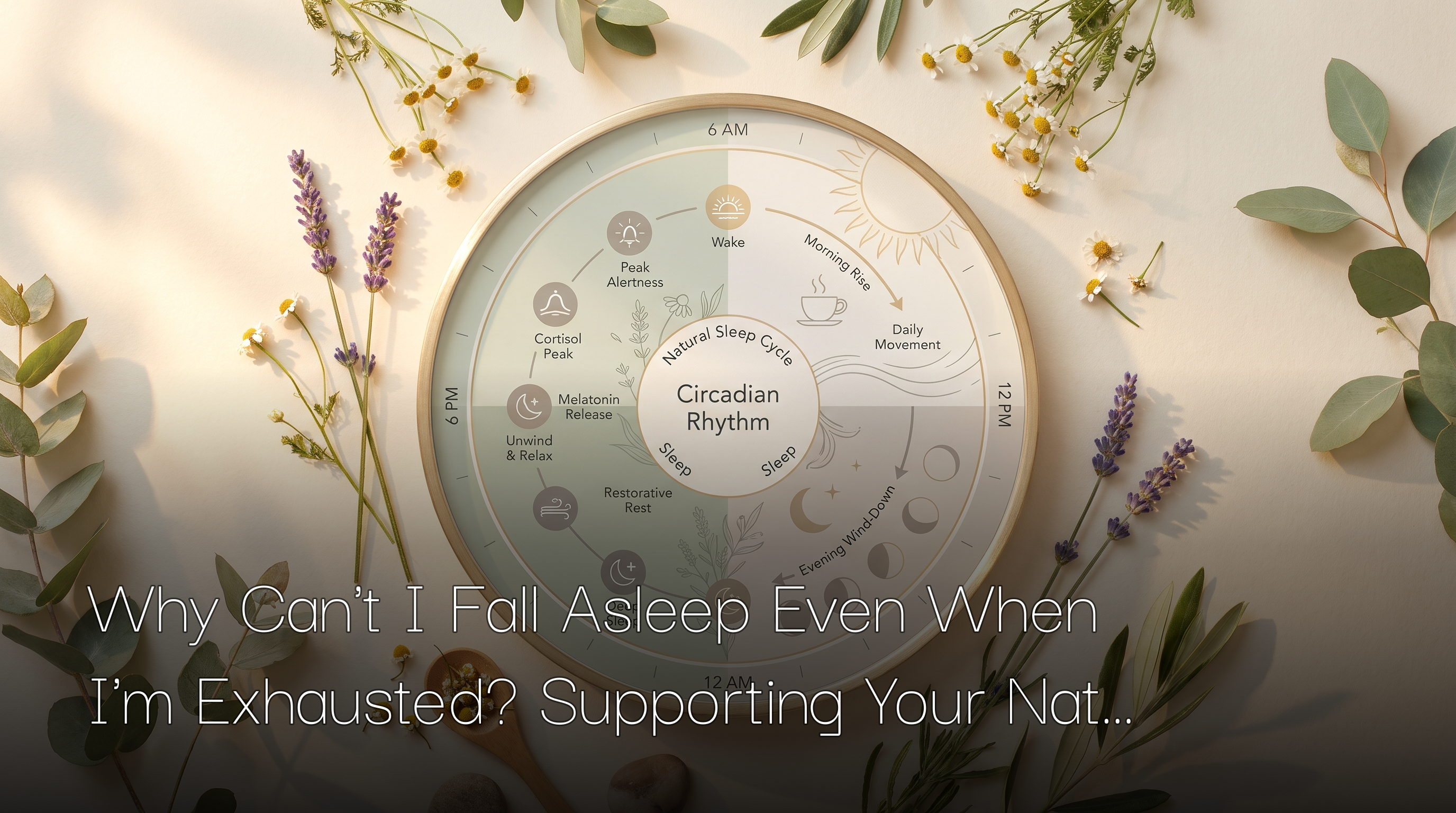
Why Can't I Fall Asleep Even When I'm Exhausted? Supporting Your Natural Sleep Cycle Through Daily Habits Your Circadian Clock Is Running the Show: Supporting Your Natural Sleep Rhythm Through Daily Habits meta-title: Support Your Natural Sleep Cycle with These Daily Habits Consider this: at 2 a.m., a nurse finishing a rotating shift sits in her car for a moment before driving home, genuinely unsure whether her body is supposed to be asleep or awake. Her circadian clock, the internal...