Why You're Exhausted Before the Day Starts (And How to Actually Fix It)
Why You're Exhausted Before the Day Starts (And How to Actually Fix It)
Why You're Exhausted Before the Day Starts (And What Actually Helps)
You slept eight hours. The alarm goes off. And somehow you feel worse than when you went to bed.
If that sounds familiar, you're not alone, and more importantly, you're not broken. Morning exhaustion that doesn't match the hours you spent in bed is one of the most common complaints people bring to their doctors, and the reasons behind it are almost never just about sleep. Diet, hydration, stress hormones, and even the structure of your morning all play a significant role in how energised you actually feel when the day begins.
This post breaks down what's really going on, and what you can do about it today.
Why Morning Fatigue Happens (It's Not Just About Sleep)
Here's what most people get wrong: they assume more time in bed equals more rest. It doesn't. You can spend nine hours horizontal and still wake up feeling like you've been hit by a bus if the quality of that sleep is poor. Conditions like sleep apnea, disrupted sleep cycles, or simply bad sleep hygiene can rob you of the deep, slow-wave sleep your body needs to actually restore itself.
But sleep is only one piece of the picture.
Overnight, your body goes without food or water for seven to nine hours. Blood sugar drops. Mild dehydration sets in. Cortisol (your primary stress hormone) begins rising in the early morning hours as part of your natural wake cycle, which is helpful in small amounts but becomes a problem when it's already elevated from chronic stress. By the time your alarm sounds, your body may be running on empty in several directions at once.
Add in a sugary breakfast (or no breakfast at all), a large coffee on an empty stomach, and a morning spent scrolling through notifications before you've even stood up, and you've stacked the deck against yourself before 9am.
Food, Hydration, and the Energy Rollercoaster
What you eat, and when, has a direct line to how you feel by mid-morning.
High-sugar foods and processed carbohydrates cause a sharp rise in blood sugar followed by an equally sharp crash. That post-breakfast slump isn't a personality flaw; it's a biochemical response. The NHS recommends eating regular meals and healthy snacks every 3 to 4 hours rather than large, infrequent meals to maintain steady energy throughout the day. Pairing lean proteins with high-fibre foods is a practical way to slow digestion and keep blood sugar more stable (Stony Brook Medicine Health). This kind of consistent, balanced approach to eating is one of the most accessible forms of natural energy support available, and it costs nothing beyond a little planning.
Hydration is just as important, and just as overlooked. Even mild dehydration causes sluggishness and tiredness. It's not dramatic thirst so much as a subtle drag on your alertness and mood. Most people reach for a second coffee when what they actually need is a large glass of water. Starting your morning with 400 to 500ml of water before anything else is a small habit with a noticeable payoff.
Scheduling meals and water breaks, rather than eating and drinking only when you feel hungry or thirsty, is a strategy recommended by UCLA Health specifically because hunger and thirst cues are often delayed. By the time you notice them, you're already experiencing the effects.
Movement, Mitochondria, and Sustainable Energy
When you're exhausted, the last thing you want to do is exercise. That resistance is understandable, and worth pushing past anyway.
At least 30 minutes of physical activity per day builds stamina over time and increases deep slow-wave sleep, which is associated with waking up feeling genuinely rested (Renown Health). Regular movement also supports mitochondrial health, the cellular machinery responsible for producing energy. Because those adaptations build gradually, the benefits are cumulative rather than immediate, which means even modest daily activity compounds meaningfully over weeks.
If 30 minutes feels impossible in the morning, the bar can be much lower. A 2021 study found that just 30 seconds of high-intensity exercise after waking, something like jumping jacks or a short sprint, helped people feel more alert (Healthline). That's not a typo. Thirty seconds.
For people dealing with chronic fatigue specifically, research suggests that yoga, qigong, and tai chi may be especially effective forms of movement, likely because they combine gentle physical activity with breathwork and stress reduction (Mayo Clinic Press).
The important caveat: overtraining has the opposite effect. If you're already running on empty and you're pushing through brutal workouts every day, more exercise is not the answer. Consistency and sustainability beat intensity every time.
Stress, Mental Load, and the Hidden Drain
This one doesn't get talked about enough.
Anxiety, depression, and burnout don't just affect your mood; they worsen fatigue by disrupting sleep, increasing muscle tension, and making even routine tasks feel disproportionately effortful (Hydration for Health). Chronic stress keeps cortisol elevated, which over time interferes with sleep architecture, blood sugar regulation, and the body's ability to recover overnight.
An unstructured morning compounds this. When you wake up with no clear plan, your brain immediately starts making decisions — what to wear, what to eat, what to respond to first — and that mental load piles up faster than you'd expect. NAMI-aligned guidance from UCLA Health recommends a morning routine that includes sunlight exposure, light stretching, breakfast, and a brief mindfulness practice as a way to increase both energy and productivity. The structure itself reduces the cognitive load.
Getting outside for even ten minutes of natural light in the morning is one of the most underrated daily habits for supporting energy. It reinforces your circadian rhythm, signals your cortisol curve to peak appropriately, and directly improves mood.
The Sleep Foundation: What Actually Counts
Most adults need at least 7 hours of quality sleep per night, and that number doesn't change much with age. The idea that older adults need less sleep is a myth, according to Mayo Clinic Press. The real variable isn't age; it's how often we shortchange ourselves and convince ourselves we've adapted.
Consistent sleep and wake times matter more than most people realise. Your body's circadian rhythm is essentially a biological clock, and irregular schedules confuse it. Going to bed at 10pm on weekdays and 1am on weekends is a form of self-imposed jet lag.
Three habits make a consistent difference here, and they work best understood as one layer of a broader daily strategy. Turning off screens 30 to 60 minutes before bed helps because the blue light from phones and laptops suppresses melatonin production, making it harder to fall into deep sleep (Stony Brook Medicine Health). Keeping your bedroom cool and dark reinforces the environmental signals your body uses to shift into rest mode. And avoiding caffeine after noon matters more than most people realise, since caffeine has a half-life of roughly five to six hours, meaning a 2pm coffee still has significant activity in your system by 7pm, quietly affecting the sleep quality you're counting on (Renown Health).
Building a Morning Routine That Actually Works
There's no single formula, but the evidence points toward a consistent set of anchors for sustained morning energy. Waking at the same time every day, including weekends, is the foundation everything else rests on. From there, drinking water before coffee and eating a protein-rich, low-sugar breakfast within an hour of waking gives your blood sugar the stability it needs to carry you through the first half of the day.
Beyond nutrition, three additional habits round out a solid morning:
- Get natural light exposure early (outside is best, a bright window works too)
- Move your body in some way, even briefly
- Delay screens and notifications for at least 20 to 30 minutes
None of these are complicated. The challenge is consistency, not complexity.
Science-backed wellness solutions can complement these foundations, but they work best when the basics are already in place. No supplement fills the gap left by four hours of sleep and three coffees.
The Practical Takeaway
Fatigue is rarely one thing. It's the overlap of sleep quality, blood sugar stability, hydration, movement, stress, and daily structure, all influencing each other. Supporting your morning energy usually means adjusting several of these at once, gradually, without expecting overnight results.
Start with the most obvious gap. If you're sleeping six hours, that's the lever. If you're eating a croissant and a large latte every morning, that's the lever. If you haven't moved your body intentionally in weeks, start there.
If you've addressed the foundational habits and still struggle to feel energised, it may be worth speaking with a healthcare provider to explore whether additional science-backed wellness solutions might complement your daily routine. A holistic approach considers all the inputs together.
Your body isn't failing you. It's responding to what it's been given. Change the inputs, and the outputs follow.
Bioharmony Group
We believe true health starts from within.. Subscribe to my newsletter.
Why You Feel So Anxious and Overwhelmed (And What Your Body Actually Needs) Why You Feel So Anxious and Overwhelmed (And What Your Body Actually Needs) Three browser tabs open. A message you haven't replied to. A to-do list that keeps growing. And somewhere in the middle of all of it, that tight, restless feeling in your chest that you can't quite shake. Sound familiar? You're not broken. What you're experiencing is your body doing exactly what it was designed to do, just in a context it...
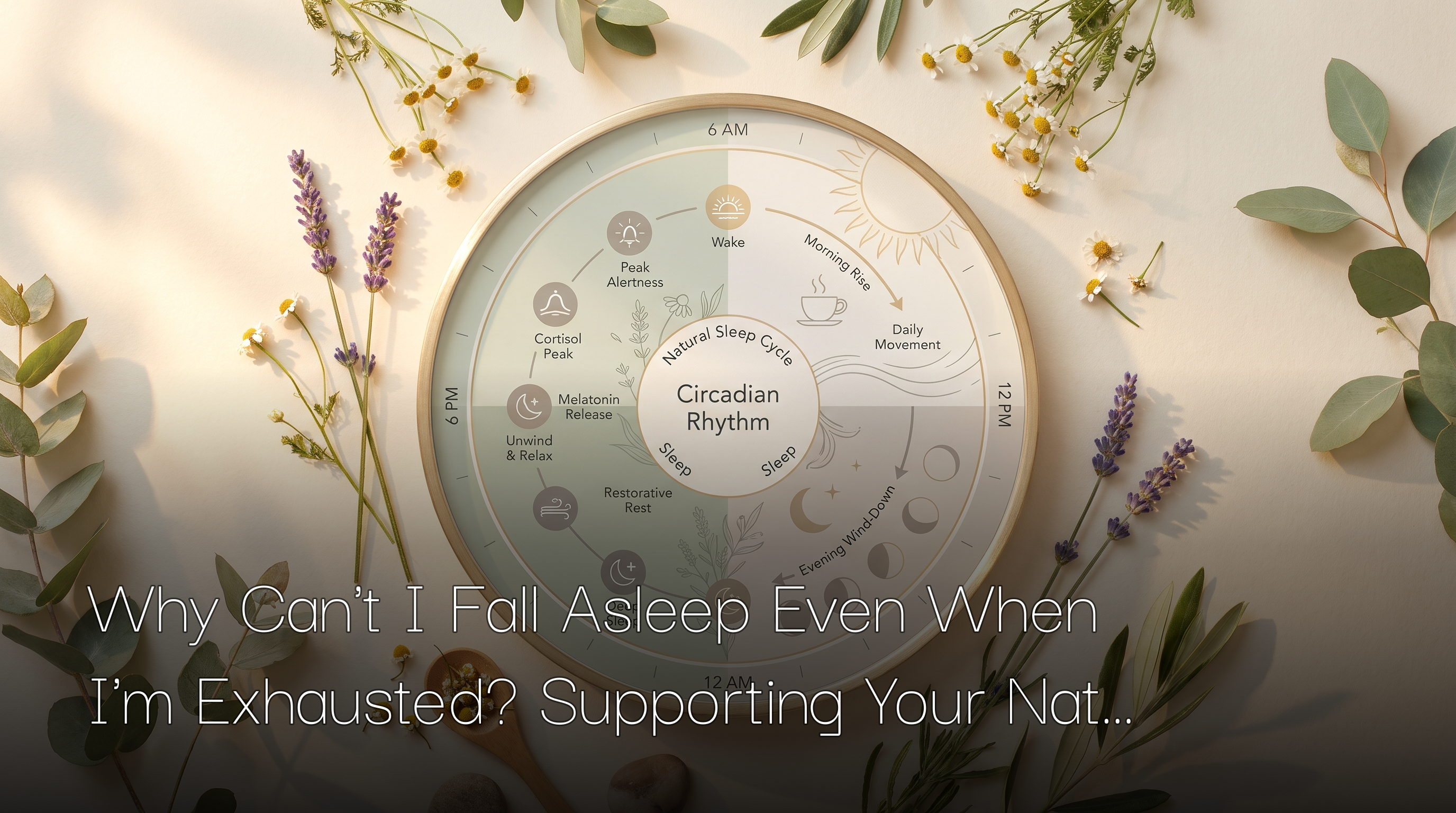
Why Can't I Fall Asleep Even When I'm Exhausted? Supporting Your Natural Sleep Cycle Through Daily Habits Your Circadian Clock Is Running the Show: Supporting Your Natural Sleep Rhythm Through Daily Habits meta-title: Support Your Natural Sleep Cycle with These Daily Habits Consider this: at 2 a.m., a nurse finishing a rotating shift sits in her car for a moment before driving home, genuinely unsure whether her body is supposed to be asleep or awake. Her circadian clock, the internal...

Why Does My Skin Look Dull and Tired? How to Support Radiant Skin From Within You slept eight hours, drank your water, cleansed your face. And yet the mirror still shows someone who looks exhausted. It's frustrating, and it's more common than you'd think. Dull skin isn't one problem with one fix. It's usually several things happening at once, most of them well below the surface. Here's what's actually going on, and what you can do about it starting today. What Actually Causes Skin to Lose Its...